

Want to live without relying on a job for income? Financial independence lets you cover your expenses through investments or passive income. This article will guide you through the essential steps, from saving effectively to smart investing and financial planning.
Understanding Financial Independence
Many aspire to financial independence, but few truly understand it. It’s a state where your financial resources cover your living expenses without needing a job. Often associated with the FIRE (Financial Independence, Retire Early) movement, this concept emphasizes aggressive saving and investing to enable early retirement.
Financial independence lets you break free from the traditional work-retirement paradigm, giving you the freedom to pursue passions, explore new interests, and live life on your terms. The primary goals of this movement include cutting expenses, increasing savings, and making wise investments. True financial independence isn’t just about having more money; it’s about consuming less while enjoying a higher quality of life.
Defining Financial Independence
Achieving financial independence is when the income generated from your investments and other revenue streams sufficiently addresses all of your living costs, freeing you from the necessity to work. It hinges on the equilibrium between assets and liabilities to guarantee that one’s financial means are adequate for their expenses.
The definition of this principle can differ based on personal beliefs and familial influences. At its core, it signifies possessing the liberty to make life decisions without being constrained by the need for a steady income.
Benefits of Financial Independence
Achieving financial independence provides a myriad of advantages, such as creating a buffer against the unpredictability of employment. It empowers you to pursue careers that resonate with your interests instead of being compelled by economic needs. With an ample amount of savings and investments in place, one can sustain a desirable standard of living even if faced with job loss, which contributes to decreased anxiety and improved quality of life.
Securing financial independence sooner rather than later amplifies your potential for wealth growth via compound interest. This paves the way to retire ahead of the usual timeframe while avoiding monetary worries during retirement years. At its core, financial independence grants you the ability to lead a fulfilling existence characterized by autonomy and intentionality, unburdened by economic limitations.
Building a Solid Financial Foundation
Embarking on the path to financial autonomy requires laying down a robust financial base. This process includes setting clear financial objectives, fostering an optimistic attitude towards finances, and implementing systems for automatic cash management alongside effective budgeting strategies.
Constructing solid groundwork is crucial for amplifying your savings, curtailing expenses, and guaranteeing regular investments into a varied portfolio.
Establishing a Bank Account
Creating a personal checking account is an essential initial move toward achieving financial independence. It serves as the hub for your financial dealings, such as settling bills and purchasing daily necessities like groceries. By prompting you to monitor your spending and assess your fiscal behavior, it aids in cultivating monetary discipline, which is instrumental in better controlling your finances.
Creating a Budget
Establishing a budget is essential for effective financial planning and reaching financial independence. One widely adopted framework is the 50/30/20 rule, which advises allocating half of your income to necessities, one third to personal desires, and twenty percent towards saving or paying off debt. This strategy provides a structure for handling daily living costs while earmarking funds for future objectives.
Changes in life can prompt a re-assessment of our financial blueprints to ensure they match current circumstances. Notable life changes such as getting married or altering career paths may necessitate tweaks in how we manage our budgets and savings approaches to stay aligned with evolving financial aspirations. Consistent review and modification of your budget are crucial practices that help sustain overall fiscal well-being and propel you forward on the path toward achieving lasting financial autonomy.
Emergency Fund
Establishing an emergency fund is a vital component of financial planning. It serves as a buffer against unforeseen expenses, providing stability in one’s finances. Strive to accumulate savings that equate to around three to six months’ worth of living expenses.
Such a fund is instrumental in shielding you from unplanned financial disruptions, thereby safeguarding your path towards achieving financial independence.
Smart Investment Strategies

Investing wisely is crucial for accumulating wealth and attaining financial freedom. Formulating an investment strategy that corresponds with your fiscal objectives and appetite for risk is essential in achieving financial success.
Establishing a variety of passive income sources via investments can diminish monetary risks while enhancing the stability of your overall earnings.
Diversifying Your Investment Portfolio
Incorporating a broad array of investments within one’s portfolio constitutes the essence of diversification, which serves to diminish financial risk. Allocating resources among diverse asset categories such as equities, fixed-income securities, and mutual funds helps guard against market fluctuations while potentially boosting overall investment returns. To preserve this diversity in alignment with your preferred degree of risk exposure, it is essential to periodically adjust the composition of your holdings.
Engaging in reliable equity investing and employing notification systems for purchasing or selling can aid in upholding a diversified investment profile while enabling swift reactions to shifts in the financial markets. Vigilant supervision over how assets are distributed is key when managing risks associated with investments and striving toward achieving financial independence.
Investing in Mutual Funds
By pooling resources from numerous investors, mutual funds offer a viable approach to diversification and expert investment management. These funds accumulate money to buy an assorted collection of equities, bonds, or other financial instruments.
Mutual funds are overseen by adept fund managers who aim for a harmonious balance between risk and potential earnings. As such, they represent a significant component that can enhance your overall strategy for investing.
Real Estate Investments
Investments in real estate can generate rental income and also have the potential to increase in value, aiding wealth creation. Properties that are rented out supply a consistent flow of earnings, which plays a major role in achieving your financial autonomy objectives.
Investing in real estate broadens your investment mix and paves the way for accumulating wealth over an extended period.
Managing Debt Effectively
To enhance your financial health and attain financial independence, it’s vital to manage debt effectively. Grasping the extent of your overall debt. Your income is key for identifying an optimal repayment strategy. Employing tactics such as merging multiple high-interest debts into one loan can lead to reduced interest rates and streamline your monthly payments.
Paying Off High-Interest Debt
Prioritizing high-interest debt repayment is essential for financial freedom. The debt avalanche method focuses on paying off debts with the highest interest rates first, minimizing interest costs over time. Another approach is the debt snowball strategy, which suggests paying off the smallest debt first to build momentum and motivation.
Paying more than the minimum on high-interest debt accelerates repayment and reduces overall interest costs. Clearing consumer debt quickly is a critical step towards achieving financial independence.
Student Loan Repayment Plans
Achieving financial autonomy necessitates adept handling of student loans. By combining several student loans into a single loan, one can streamline the payment process and possibly reduce monthly outlays. Repayment plans that take your income and family size into account to tailor monthly payments can make them more affordable.
Leveraging resources such as the loan simulator available on the Federal Student Aid website is beneficial in identifying an optimal repayment strategy tailored to individual circumstances.
Maximizing Income Sources

Adopting a strategy that focuses on maximizing various sources of income is crucial for achieving financial independence. Enhancing one’s financial security can be achieved by diversifying their income, which may include part-time employment, freelance opportunities, and making calculated investment choices.
By establishing multiple streams of revenue, not only does the total income rise, but it also acts as a safeguard against any potential financial hardships.
Active Income
Earning active income comes from direct participation in jobs that deliver services, which includes receiving wages or doing freelance tasks. To boost one’s active income, strategies might include negotiating for a higher salary, seeking additional education to enhance skills, and engaging in supplementary side gigs.
By broadening the variety of your active income streams, you can substantially aid in achieving your financial freedom objectives.
Passive Income
Earnings that arise from endeavors like rental properties and various investment ventures with minimal active involvement are known as passive income. This type of income, which includes revenues such as interest, dividends, royalties, and capital gains from investments, offers a consistent flow of funds that diminishes the dependence on traditional employment while bolstering financial security.
Allocating funds into mutual funds, property assets, and stocks yielding dividends is a strategic method for creating sources of passive income. Establishing a strong portfolio centered around these forms of passive earnings can play an essential role in attaining financial autonomy and facilitating the possibility of retiring ahead of schedule.
Planning for Early Retirement
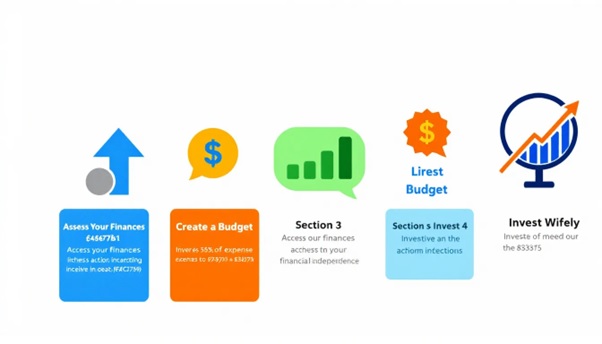
To achieve financial independence and retire early, one must set distinct financial objectives and develop a robust plan for managing finances. The approach known as Financial Independence Retire Early (FIRE) highlights the importance of rigorous saving habits and astute investment strategies to facilitate an early retirement.
Securing financial independence empowers people to chase their aspirations without being hindered by monetary limitations. By achieving this level of fiscal freedom, individuals can enjoy life’s pursuits on their own terms.
Setting Financial Goals
Establishing clear and attainable financial goals is critical for planning an early retirement. Engaging a financial planner can greatly improve your comprehension of the advantages associated with setting and reaching those financial milestones.
These well-defined objectives serve as a navigational guide, guaranteeing that all your endeavors are in sync with your end goal of achieving financial independence.
Calculating Your FIRE Number
Calculating the sum needed to achieve Financial Independence Retire Early (FIRE) is crucial for planning how much you need to save in order to sustain your desired lifestyle after retirement. Those who aim to retire early typically strive for a savings goal that amounts to 25 times their annual expenses. This target, influenced by the Rule of 25, which corresponds with a safe portfolio withdrawal rate of up to 4%, indicates the level of financial reserves necessary.
For example, should your yearly living costs amount to $80,000, then securing a nest egg worth $2 million would be required. This will enable an annual drawdown of $80,000 from your savings while factoring in inflation adjustments. Adhering to this saving strategy ensures that one can retain their preferred standard of living throughout their retirement years.
Utilizing Professional Advice
Consulting with a financial advisor can greatly improve your efforts in financial planning. These professionals bring their expertise to the table by meticulously evaluating your financial portfolio and offering continuous counsel, which includes keeping a watchful eye on and making timely adjustments to your investments.
Role of a Financial Planner
A financial planner is instrumental in formulating and upholding efficient strategies for managing finances. By offering personalized guidance, they contribute to the mitigation of investment risks and enhance risk management.
Engaging with a financial planner heightens recognition of the advantages that come from establishing and realizing financial goals.
Finding the Right Advisor
Selecting an appropriate financial advisor requires recognition of the various advisors available and a clear determination of your financial necessities. It’s crucial to take into account fiduciary advisors, who have a legal responsibility to prioritize your interests. To identify a reliable advisor, one must conduct thorough research on their qualifications and track record.
During consultations with a financial advisor, it is important to inquire about their planning methods and ask if there are any conflicts of interest that could affect you. Grasping how they devise strategies can confirm alignment with your own financial objectives and inclinations.
Maintaining Financial Health
Regularly evaluating your financial habits and net worth is crucial for preserving your financial health. It’s vital to keep a close eye on your credit report and ensure that your debt-to-income ratio does not exceed 35%.
To prevent the erosion of wealth, it’s wise to conduct routine audits for any subscriptions that are no longer in use and to eliminate redundant credit cards.
Regularly Reviewing Investments
Consistently scrutinizing and modifying your investment portfolio is essential for preserving your financial well-being. Monitoring your investments keeps them up-to-date and in harmony with your financial aspirations. Employ notifications on purchasing/selling opportunities, as well as stock updates, to vigilantly oversee your investments and make decisions that are backed by knowledge. This forward-thinking strategy positions you to anticipate market fluctuations and sustain a diversified portfolio.
It’s equally crucial to rebalance your portfolio at regular intervals to confirm it mirrors the level of risk you’re comfortable with and aligns with your economic aims. By routinely assessing and tweaking where necessary, you can enhance potential returns while mitigating risks, furthering progress towards achieving fiscal autonomy.
Adapting to Life Changes
Financial planning is crucial to navigate the unpredictable nature of life, as unforeseen developments can profoundly alter your financial landscape. Life events such as getting married, expanding your family with children, undergoing a divorce or shifting career paths – even sudden occurrences – necessitate new fiscal obligations and shift monetary priorities. Grasping the influence of these changes on your expenses, income and paramount financial goals allows you to modify your plans in finance effectively.
Constantly reviewing where you stand financially enables you to identify moments that require modifications in how you manage money. This may call for creating a revised budget, changing how investments are distributed, or establishing fresh benchmarks for savings that reflect recent changes in your situation. Maintaining flexibility and taking proactive steps ensures that the trajectory of your financial strategies stays consistent with the ever-changing objectives and focal points of your life’s journey.
Summary
Attaining true financial independence requires a comprehensive approach that includes grasping the concept thoroughly, establishing a strong financial base, implementing intelligent investment tactics, effectively managing debts, enhancing sources of income and devising plans for early retirement. Access to expert advice and consistently nurturing your financial health through periodic evaluations and necessary adjustments are key actions on this path. These methods will empower you to achieve genuine financial freedom and the ability to lead your life according to your own preferences.
It’s important not to forget that achieving lasting fiscal autonomy hinges on persistence, self-discipline, and the capacity for flexibility in response to change. Maintain focus on your monetary aspirations. Don’t hesitate to consult with finance professionals as needed. Make it routine practice to reassess fiscal strategies so they stay congruent with evolving personal situations. With unwavering resolve coupled with appropriate techniques at hand, claiming ownership over one’s own economic destiny is indeed an attainable goal.
Ms. Bhaswatee Das
Assistant Professor
Don Bosco Institute of Technology